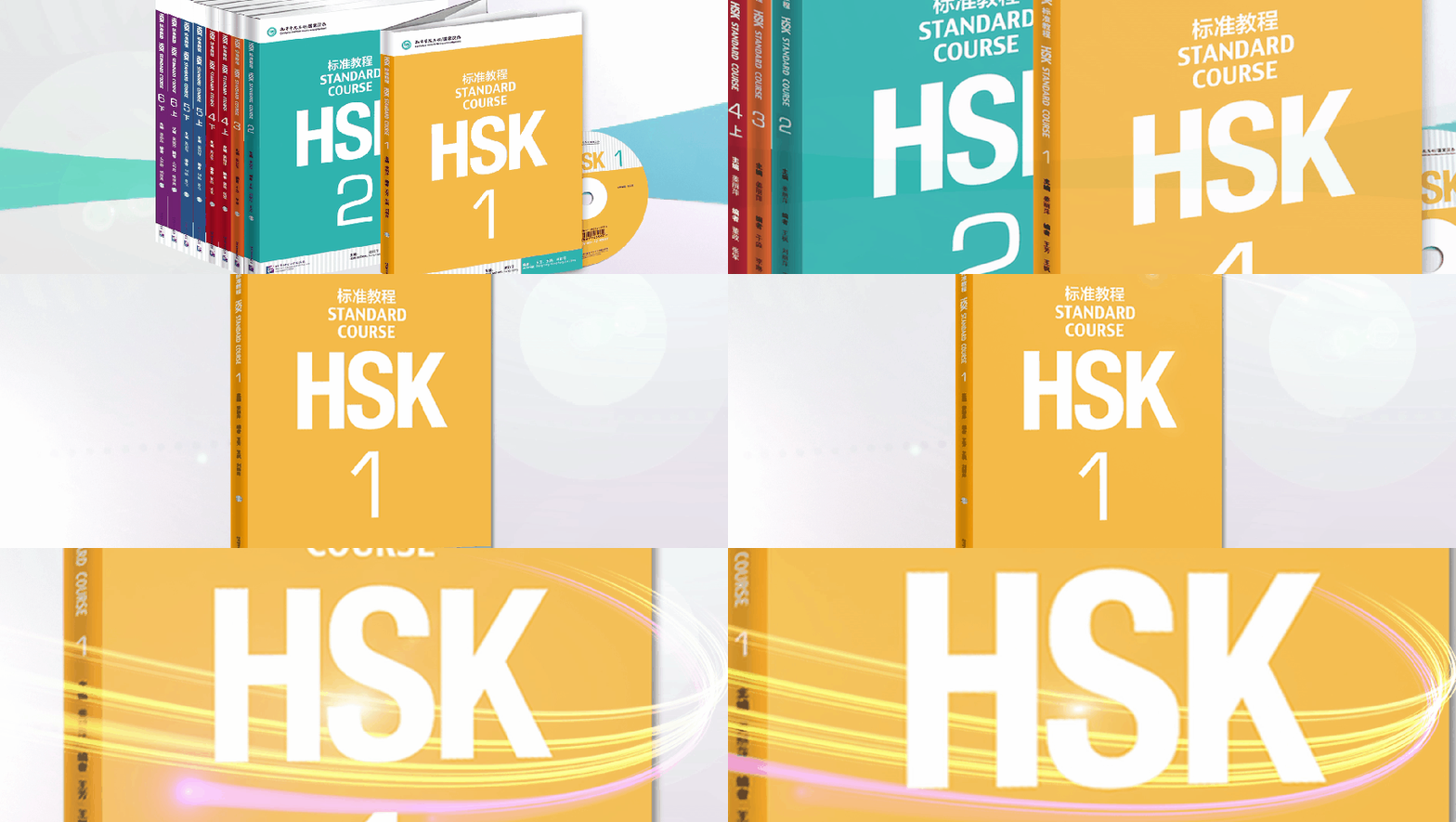
“Series of Teaching Foreigners
Chinese Grammar” is the achievement of “Research and Development of Grammar
Syllabus for Teaching Chinese as a Foreign Language and Teaching Reference
Grammar Series (Multi-volume)”, a major project of National Social Science Fund
of China sponsored by Professor Qi Huyang, which has been selected as the “2022
Funding Project of National Publication Foundation”. As an important reference
book for international Chinese language education, it aims to build and improve
the “Grammar System of Chinese Teaching” for foreign students to meet the
development needs of the new era. It mainly serves the front-line Chinese
teachers, researchers, graduate students and undergraduates majoring in
Teaching Chinese to Speakers of Other Languages. This series consists of 39
volumes, including 4 outline series, 8 summary series, 26 book series, and 1
collection of essays.
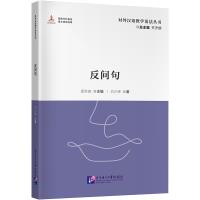
Rhetorical questions adopt an interrogative form and
rhetorical tone in echoic use, as a subcategory of echoic interrogative
sentences with a metarepresentational structure. Rhetorical questions are used
to metarepresent the speaker’s attitudes of doubt toward the quoted utterances
or thoughts of others, such as reminding, puzzlement, surprise, astonishment,
questioning, disapproval, denial, refutation, objection or blame, and such
doubtful attitudes are often interpreted by negative words. Based on the above
views, this book sorts out the semantic, formal and prosodic features of
Chinese rhetorical questions, analyzes the usage of typical rhetorical question
patterns, and further puts forward teaching suggestions for Chinese rhetorical
questions focusing on echoicity and metarepresentation.
Shao Hongliang, PhD in Linguistics and Applied Linguistics from
Shanghai Normal University, is a Professor and PhD Supervisor at the School of
Chinese Studies and Exchange, Shanghai International Studies University. His
research mainly focuses on modern Chinese grammar and international Chinese
language education. Professor Shao has published more than 50 papers in
journals such as Studies of the Chinese Language, Chinese Teaching in
the World, and Language Teaching and Linguistic Studies. His
monograph On the Redundancy of Chinese Syntactic-Semantic Markers won
the 8th Higher Education Outstanding Scientific Research Achievement Award
(Young Scholar Award) from the Ministry of Education.
Bai
Shaohui, PhD in Linguistics and Applied Linguistics from Shanghai Normal
University, is an Associate Professor and Master’s Supervisor at the International
Institute of Education and Culture, Heilongjiang University. His research mainly
focuses on Chinese grammar and international Chinese language education. Professor
Bai has published several papers and authored one textbook. He has worked as a
government-sponsored Chinese language teacher in Tunisia, Canada and France.
Guided by existing research achievements on rhetorical
questions in theoretical Chinese studies, and aiming to guide the practical
application of international Chinese language teaching, this book explains the
discussed issues with simple expressions and intuitive analyses. Starting
systematically from the perspectives of teaching grammar and acquisition, it
presents problems through a combination of description and commentary,
highlighting the academic nature, originality and practicality of its evaluations.
The content selected in this book meets teachers’ needs and can solve practical
problems in teaching. The sorting, summarization and commentaries on existing
research results also provide an important reference for researchers. Readers
can not only understand and remember the content easily, but also apply it
effectively in teaching and research.
This book is recommended for front-line Chinese language teachers, researchers, graduate and undergraduate students majoring in Teaching Chinese to Speakers of Other Languages.
BEIJING LANGUAGE AND CULTURE UNIVERSITY PRESS CO.LTD
Mailing Address: No. 15 Xueyuan Road, Haidian District, Beijing 100083
Tel: +86-10-82303645 Fax: +86-10-82303908
Copyright ? 2026 Beijing Language and Culture University Press Co.Ltd. All rights reserved.